Exclusive csbk.ca Editorial from “Motor Mouth” Dave Booth
There’s only one downside to motorcycle racing: Money. As in, no matter how much you have, it’s never enough. It doesn’t matter which class you’re competing in or what level competition you’re facing, racing always seems to cost more money than you have.
Money buys tires. Money buys horsepower. Money buys carbon fibre and titanium, Brembo brakes and Ohlins suspension. Basically, money buys speed. And since you always need more speed, the one constant in all of racing is that you always need more money. Privateer in Canada or world-famous MotoGP satellite team (witness Forward racing and LCR Honda this year), you’re still always short of the cash you need to be truly competitive.
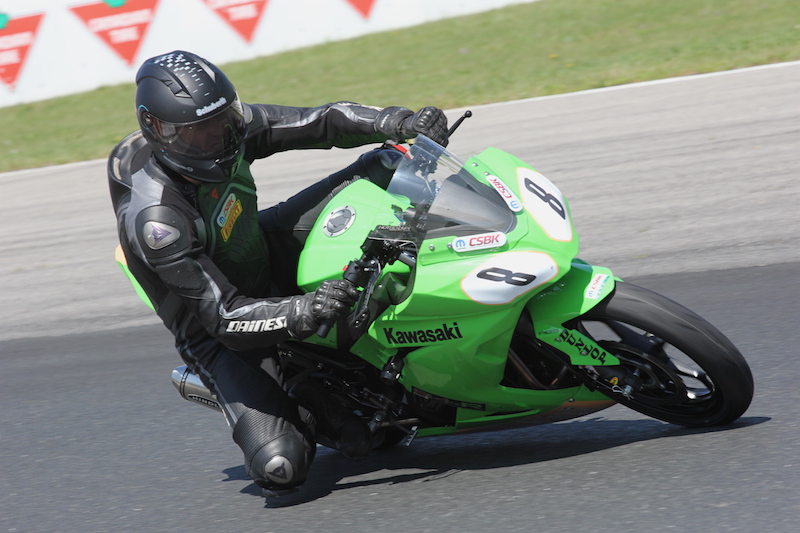
Unless, of course, you’re racing in a spec series. By very definition — the machines are mandated to be exactly identical — there is no money to be spent on the never-ending quest for more speed. And if — as Kawasaki Canada is proposing for 2016 — the base for your spec series sensibly-priced sportster (in this case, the thoroughly competent Ninja 300) then you actually have the possibility of bargain-basement racing at its very cheapest.
And possibly also it’s finest. Though we all worship at the altar of speed and cheer lustily for different brands, the dirty secret of racing is that the closest competition is always between identical machines of modest power. MotoGP might be motorcycling’s pinnacle, but the best racing is always in Moto3.
Kawasaki has yet to set the price for its racing-upgraded Ninjas or, indeed, the structure of the series. However, if they’re looking for a road map on how to get new racers interested in the sport, there’s a perfect Canadian role model just waiting to be emulated: Nissan’s Micra Cup challenge. Essentially the four-wheeled version of the same, bargain-basement route Kawasaki is following,
Nissan takes its cheapest car — the $9,998 Micra — and upgrades essentially the same components — suspension, brakes and tires — that Kawasaki does for the baby Ninja. Oh, the cager does get the requisite, uhm, roll cage, and the little two-wheeled green meanie gets a quick shifter, but the formula remains the same.
The horsepower is low (the Micra boasts an extremely modest 109 horsepower, the Ninja 300 a similarly self-deprecating 36-hp), the engine is understressed (minimizing costly maintenance) and the tires (Pirelli slicks for the cars, Dunlop DOT racers for the Ninjas), always one of the biggest costs in the racing budget, are incredibly long-wearing considering their prodigious grip.
So well controlled are the costs in the new-for-2015 Nissan Micra Cup that what started as a will-enough-racers-ante-up hope for 22 participants has grown into they-can’t-all-fit-on-St-Eustache 28 cars on the grid as more prospective car racers realize that racing and budget don't have to be mutually exclusive.


Perhaps the bigger revelation, however, is that the cheaper the racing, the more fun it is. And that applies to spectator and racer in equal measure. For the racers, it means that the competition is closer. At this year’s Canadian Gran Prix, it was the Nissan Cup that generated the closest competition, even neophytes like Yours Truly “trading paint” and rubbing fenders like the big boys as every corner had three Micras trying to jam into a hole only big enough for two.
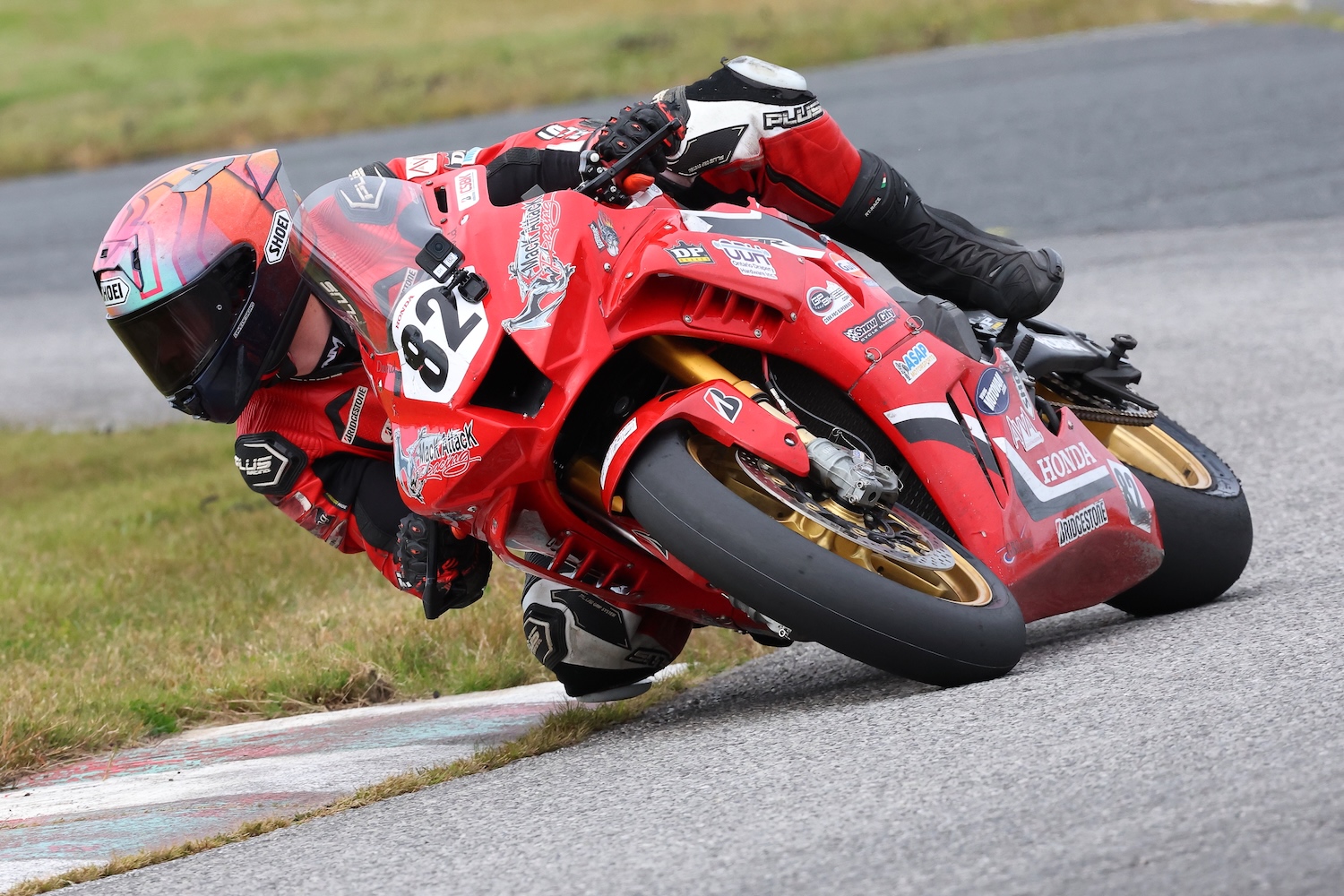
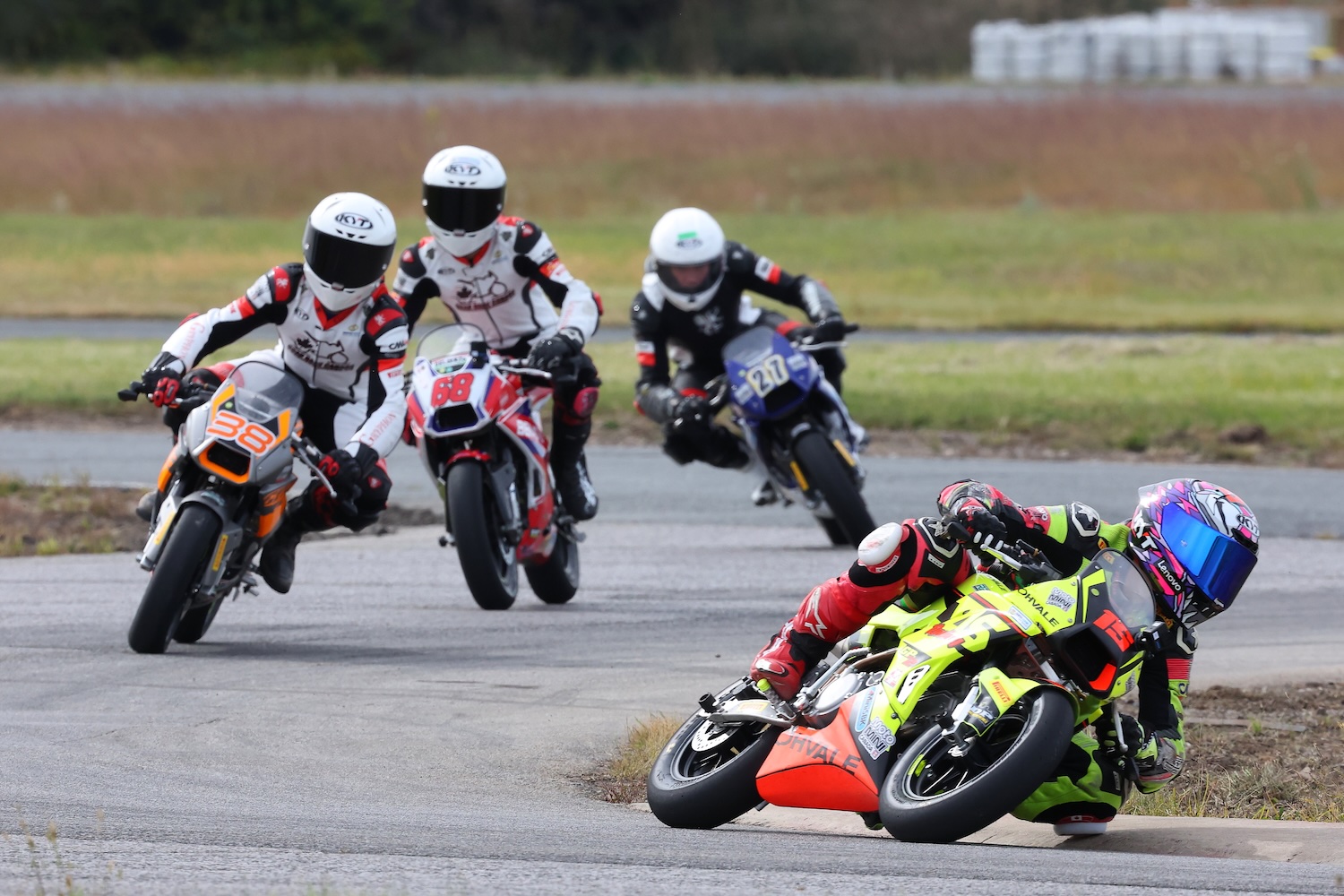
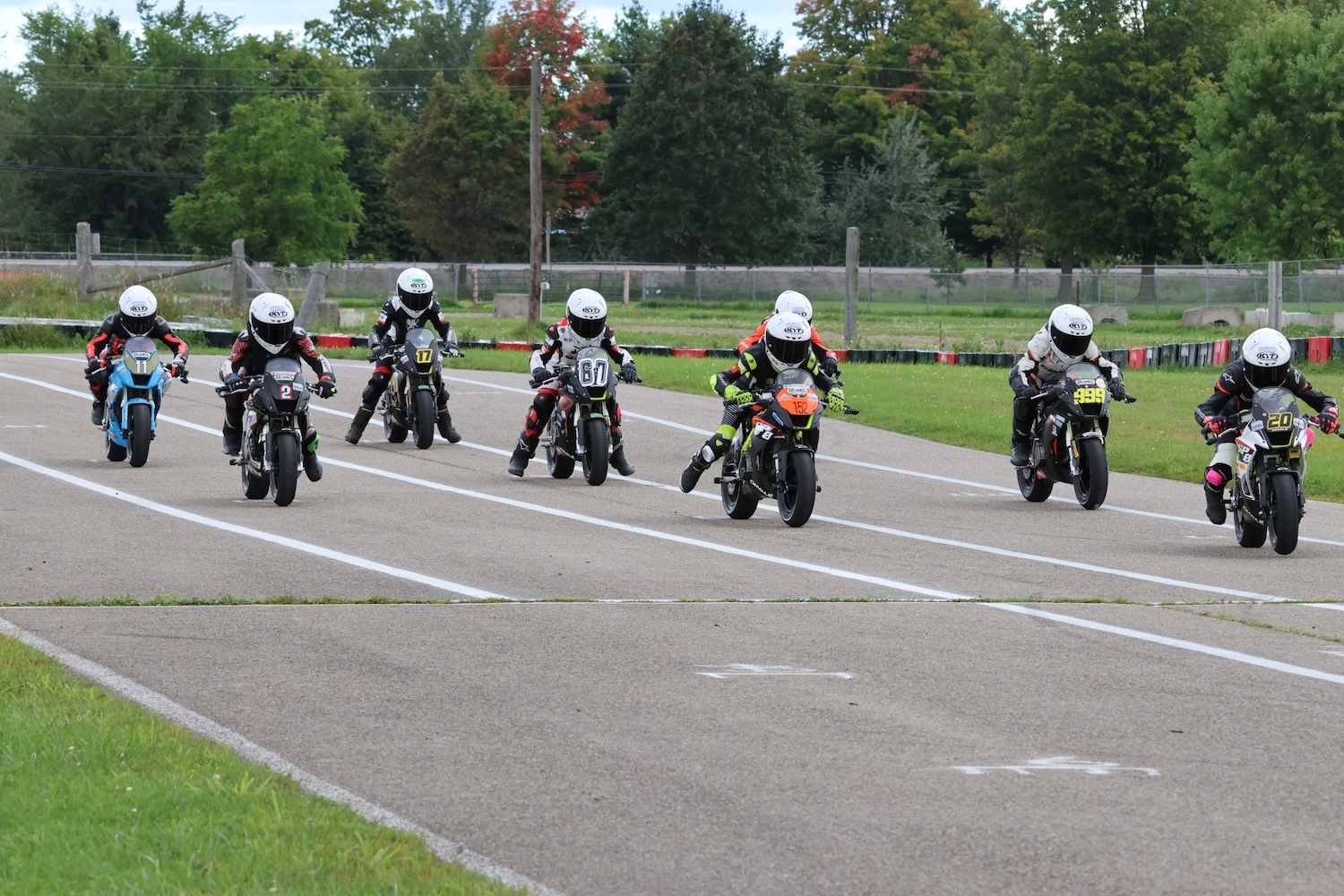
Likewise, spectators at this year’s August 18/19 CSBK round were treated to elbows out racing at its finest, the 20 screaming 300s in close quarters, sometimes four — and even five — abreast into corner one, no quarter given nor, as the adage mandates, asked. What the Ninja 300 Challenge lacks in velocity it more than makes up in close-quarter handlebar-banging excitement.
And to be perfectly honest, for we of merely mortal talent, racing a Ninja 300 is way more fun than trying to harness the power of a 1000-cc superbike, Kawasaki or otherwise. Jordan Szoke and Matt McBride may have come to grips with the delicacy of throttle required to keep a 186 horsepower superbike rubber side down, but David Booth hasn’t.
It is, in fact, the little Kawi’s lack of power that is the enticement, its modest power easy on we Walter Mittys’ ego. Indeed, around a big track like Mosport, the 300’s little twin is virtually wide open all of the time, the indecent amount of time the throttle is pegged convincing we of modest talent that we are indeed the master of our man/machine interface.
In contrast, constantly throttling back a full-blown superbike just reminds the neophyte of their glaring lack of talent. Unless you’re one of Canada’s top ten road racers, you’ll have more fun — and learn more — racing a little 300 tiddler than a tire-shredding superbike.
That may a bitter pill to swallow for those raised on the more-is-better principle but it doesn't make it any less true. And, just so you know, though the penalty for ham-handed throttling may be greater on two wheels, the same principal still applies to four. It was the little Micra’s very lack of horsepower that forces the neophyte to learn better racecraft, every kilometer an hour of conserved corner speed making up for the 1.6-litre Nissan complete lack of straight-line horsepower.
And the similarities go beyond just the on-track shenanigans. Indeed, Kawasaki Canada could learn some important lessons from the immensely successful Nissan Cup series, namely that a) the series must be affordable and b) the series must be promoted from the very onset.
Nissan Cup Micras costs less than $20,000 ready to race, a pittance in the cager world and Nissan Canada estimates that running the entire 12-race, six-event series — including entrance fees, fuel and, yes, tires — will cost but another 20 large, coffee money by car racing standards. And, because these spec series require an abundance of close racing — as opposed to an abundance of speed — for spectator enthusiasm, it is absolutely essential that Kawasaki Canada do whatever it takes to ensure that all 20 of the Ninja 300s it has prepared take to the grid at the very first race of the 2016 season.
If the 300cc Ninja series is half as popular as the Nissan Micra Cup, it will prove a massive boon to our sport and the gateway for new riders that motorcycle racing so desperately needs.
About the author…
Veteran motorcycle and automotive journalist David Boost handles the auto beat for the “National Post” newspaper chain, regularly comments on motor powered activities on various media, but at one time was a staffer at “Cycle Canada.” Booth has competed in a number of spec racing series including both the Honda CBR125 and 250 Championships, and is old enough to remember the Yamaha RZ350 Cup in the late 1980s. Booth also has a diverse collection of street bikes, and has attended the legendary Isle of Man TT races.